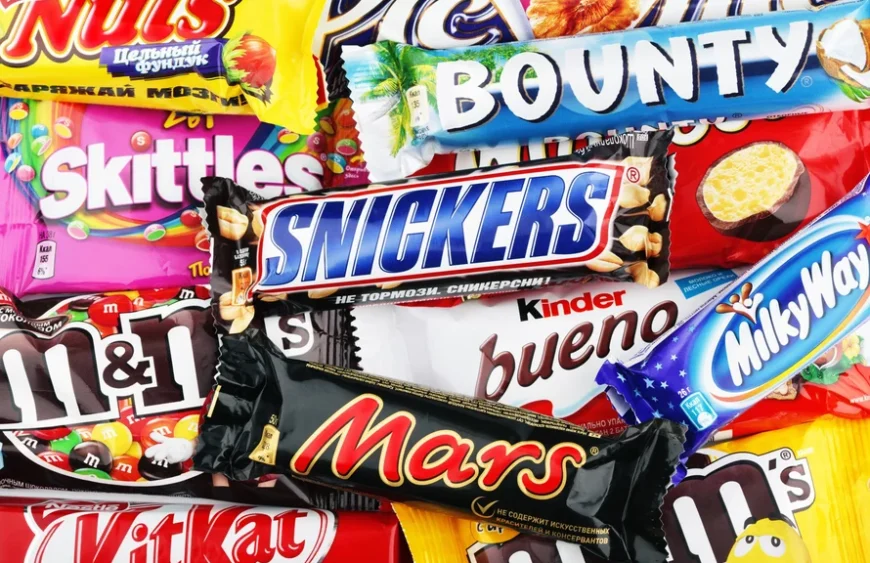
Branded confectionery and private-label confectionery can both play useful roles in a retail assortment, but they solve different commercial problems. Wholesale buyers should compare them across customer recognition, margin, minimum order quantity, product-development effort, stock risk and speed to market.
Branded products reduce customer uncertainty
Recognizable brands arrive with existing consumer awareness. Shoppers often know what to expect from the product before they enter the store, which can support faster trial and repeat purchase.
For retailers building a German or European range, established brands can also act as anchors around which less familiar products are introduced. Our German chocolate brands guide explains how brand roles can shape an assortment.
Private label offers more control
Private-label products can give the retailer greater control over positioning, packaging and price architecture. They may also support stronger differentiation because the exact product is not directly comparable with every competitor.
However, private label usually requires more work. Buyers may need to manage product specifications, packaging, compliance, artwork, production quantities and quality control.
Compare MOQ and stock exposure
Branded wholesale products are often available in standard cases or mixed-pallet orders. Private-label production can require substantially larger minimum quantities. A low ex-factory unit cost does not help if the retailer must hold months of inventory.
Use our case pack planning guide and inventory turnover guide to compare stock exposure.
Look at total margin, not only purchase price
Private label may create room for higher gross margin, but buyers should include product development, packaging, artwork, quality checks, freight and possible write-offs. Branded products may cost more per unit while requiring less setup and carrying less launch risk.
Consider speed to market
A branded wholesale SKU can often be listed quickly once supply and labeling are confirmed. Private label takes longer because the product and packaging must be developed or approved.
Use each type for a clear role
A blended range can make sense. Branded products can drive traffic and trust, while private label can fill value, exclusive or margin-building positions.
- Branded core: familiar traffic-driving lines.
- Branded premium: recognized gifting or indulgence products.
- Private-label value: controlled entry price point.
- Private-label exclusive: differentiated product unavailable elsewhere.
Test customer demand before expanding private label
If the retailer already sells branded products in a category, those sales can help estimate demand before developing a private-label equivalent. A proven category is generally a stronger starting point than an entirely new customer need.
Protect category clarity
Too many near-identical branded and private-label products can create duplication. Use the principles in our assortment rationalization guide to keep each SKU’s role distinct.
Choose based on business model
Retailers seeking rapid range expansion and recognizable European products may lean more heavily on brands. Larger chains with product-development capability may use private label to create exclusivity and improve price architecture. Many successful ranges use both.
German Sweets & Candies GmbH focuses on a broad branded wholesale selection available through the Shop. For B2B sourcing questions, visit Contact Us.